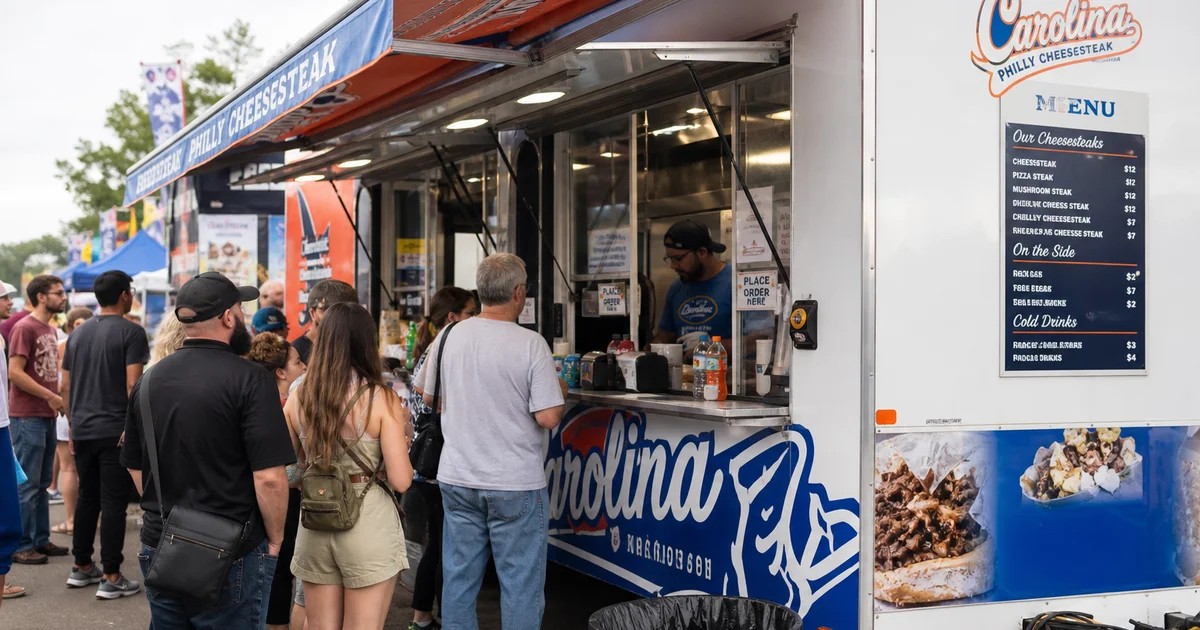
Concession Trailers Cover a Lot of Ground
As an independent operator, securing proper concession trailer financing is the first step toward launching a profitable mobile business. The U.S. food truck and trailer industry reached an estimated $2.8 billion in revenue in 2026, according to market data from Zion Foodtrucks.
That massive growth means more competition for prime locations. Finding the right Food truck and trailer financing gives you the edge to acquire top-tier equipment. We have seen how proper funding transforms a basic concept into a highly successful local restaurant.
“Concession trailer” is a broad term, so let us review the exact layouts, equipment requirements, and strategies needed to launch successfully.
Layout Types
Every successful build starts with the right floor plan for your specific menu and customer volume. We recommend choosing a layout that maximizes your serving speed during peak rush hours. According to 2026 industry pricing data from Zion Foodtrucks, a basic 16-to-20-foot concession rig now runs between $40,000 and $65,000.
The layout directly dictates your fabrication expenses, and our cost to finance a food truck or trailer guide breaks down how each upgrade shifts your total build budget. You will see costs jump significantly if you require a 24-foot trailer with dual windows and walk-in refrigeration. We often work with owners buying from regional fabricators like East Coast Concessions to ensure accurate quotes.
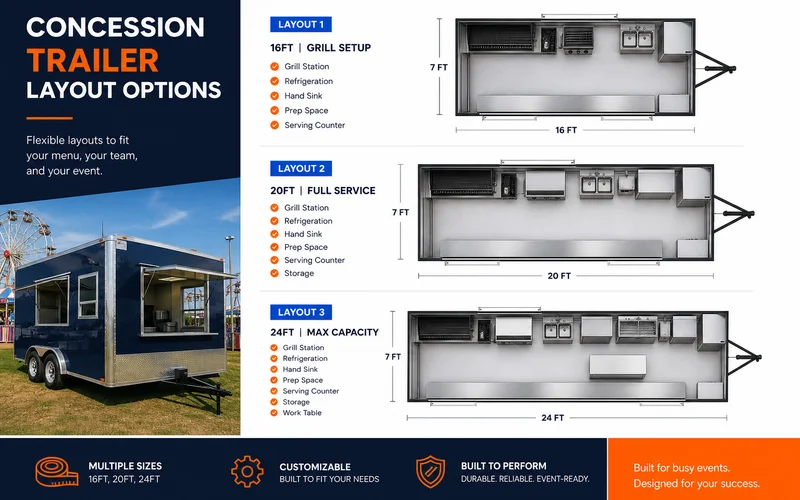
Here are the most common configurations for North Carolina operators, along with standard 2026 cost comparisons to help you set a realistic budget:
- Single-serving-window: This is the straightforward fair layout with prep space behind and cooking equipment along the back wall.
- Multi-window: These feature two or more serving windows to handle high-volume events.
- Awning and serving counter: Venues with established outdoor seating often use this extended exterior design.
- Specialty-equipment-focused: These builds center around specific machinery like commercial ice cream dispensers or funnel-cake stations.
| Trailer Layout Type | Typical Size | Estimated 2026 Cost | Best For |
|---|---|---|---|
| Basic Single-Window | 16-20 ft | $40,000 to $65,000 | Simple menus, new startups |
| Specialty Focus | 16-20 ft | $60,000 to $85,000 | Coffee, ice cream, pretzels |
| High-Volume Multi-Window | 24 ft | $120,000 to $160,000 | Large festivals, catering |
Equipment Considerations
Your concept dictates exactly what goes inside the kitchen space. We see many new restaurateurs underestimate the true cost of commercial-grade appliances.
A common pitfall is ignoring strict local codes, like the NFPA 96 standards required for cooking ventilation hoods. You must meet these safety regulations before serving a single customer.
Core Kitchen Components
We suggest breaking your equipment list into specific functional zones. This approach makes it easier to track power requirements and costs.
- Hot cooking equipment: Fryers, griddles, ranges, and ovens pull heavy electrical and gas loads.
- Refrigeration: Reach-in coolers, freezers, and ice bins are power-hungry but essential.
- Specialty equipment: High-margin concepts rely on funnel-cake fryers, pretzel ovens, and popcorn machines.
- Prep and serving: Stainless tables, hot-hold cabinets, and condiment stations speed up ticket times.
- Ventilation: Hood systems are required for most hot cooking applications.
Bundling Your Financing
Financing your trailer and your equipment together with a specialty food trailer loan is the smartest move for startups. Operators who try to fund the physical trailer and the appliances separately usually run into severe timing mismatches.
We provide bundled financing to ensure your entire rig is ready at the exact same time. A recent 2026 insurance report from FLIP noted that equipment failure and theft are the top claims for mobile food businesses, so investing in high-quality gear from day one is critical.
Power Setup
Consistent power is the lifeblood of any mobile restaurant. We always tell clients that undersized generators cause constant equipment startup failures.
You must add a 25 to 30 percent buffer above your running wattage to handle sudden starting spikes from refrigeration compressors. Most modern 50-amp rigs require powerful solutions like a Predator 9500-watt inverter or a comparable Cummins Onan commercial unit.
We recommend choosing a quiet-run model to keep noise levels down for your customers. According to 2026 claims data from FLIP insurance, portable generators are the most frequently stolen item on a food truck, so secure mounting is absolutely mandatory.
Here are the most reliable power configurations for the road. You must match these setups to your expected environment:
- Built-in generator: This is the default for festival operators who lack reliable venue power.
- Shore-power connection: This setup works perfectly for fixed events with direct grid access.
- Hybrid systems: You can use a generator for the festival circuit and shore-power plugs for venue gigs.
Oversized generators waste expensive fuel and increase your initial loan amount. We connect operators with experienced fabricators who calculate the exact electrical load required for your specific appliances.
Festival Circuit Financing
Festival concession trailer financing relies on highly predictable seasonal schedules. We structure our lending to match the exact cash flow rhythm of the summer and fall rushes.
The 2025 North Carolina State Fair attracted nearly 947,000 attendees over its eleven-day run, according to the Department of Agriculture. You need your equipment ready and your staff paid long before crowds of that size arrive.
We offer specialized loan structures that adapt to your specific revenue curve. This flexibility keeps your business solvent during the slow winter months.
- Seasonal payment structures: You make larger payments during peak festival season and lighter payments during the off-season.
- Pre-season equipment financing: This ensures your custom rig is built and delivered before opening day.
- Working capital: Use restaurant working capital to purchase bulk inventory and train staff ahead of major events.
Used Concession Trailers
The secondary market for mobile kitchens is incredibly active across North Carolina. We finance a large volume of used units sourced from private sellers and commercial auction platforms.
Used prices have increased by roughly 15 to 20 percent since 2022 due to high demand across the industry. A basic used trailer that cost $50,000 three years ago might now sell for $60,000 or more based on recent market reports.
We highly advise getting a thorough inspection from your local county health department before signing a purchase agreement. The upfront savings are still significant, but you must factor in potential repair costs.
Before buying used, compare the typical trade-offs to a new build. You must decide if the initial discount outweighs the lack of a warranty.
| Consideration | New Concession Trailer | Used Concession Trailer |
|---|---|---|
| Initial Cost | Highest price point | Discounted 30 to 50 percent |
| Warranties | Full manufacturer coverage | Sold as-is with no coverage |
| Customization | Built to exact specifications | Requires costly modifications |
| Availability | Three to six month wait | Immediate possession |
Purchasing a used rig allows you to start serving faster if you find a layout that matches your menu. We help you secure the funding needed to buy the trailer and pay for any necessary compliance upgrades.
Next Step
Sizing and funding your concession trailer build is the first major step toward launching your mobile business.
Start your application today with a quick 60-second pre-qual.
This initial check uses a soft credit pull that will not impact your score. Give our team a call at (910) 685-8872 to discuss your specific concept and secure your financing today.